Software
·
vi-Trace
vi-Trace
Product passports
Blockchain-enabled Digital Product Passports
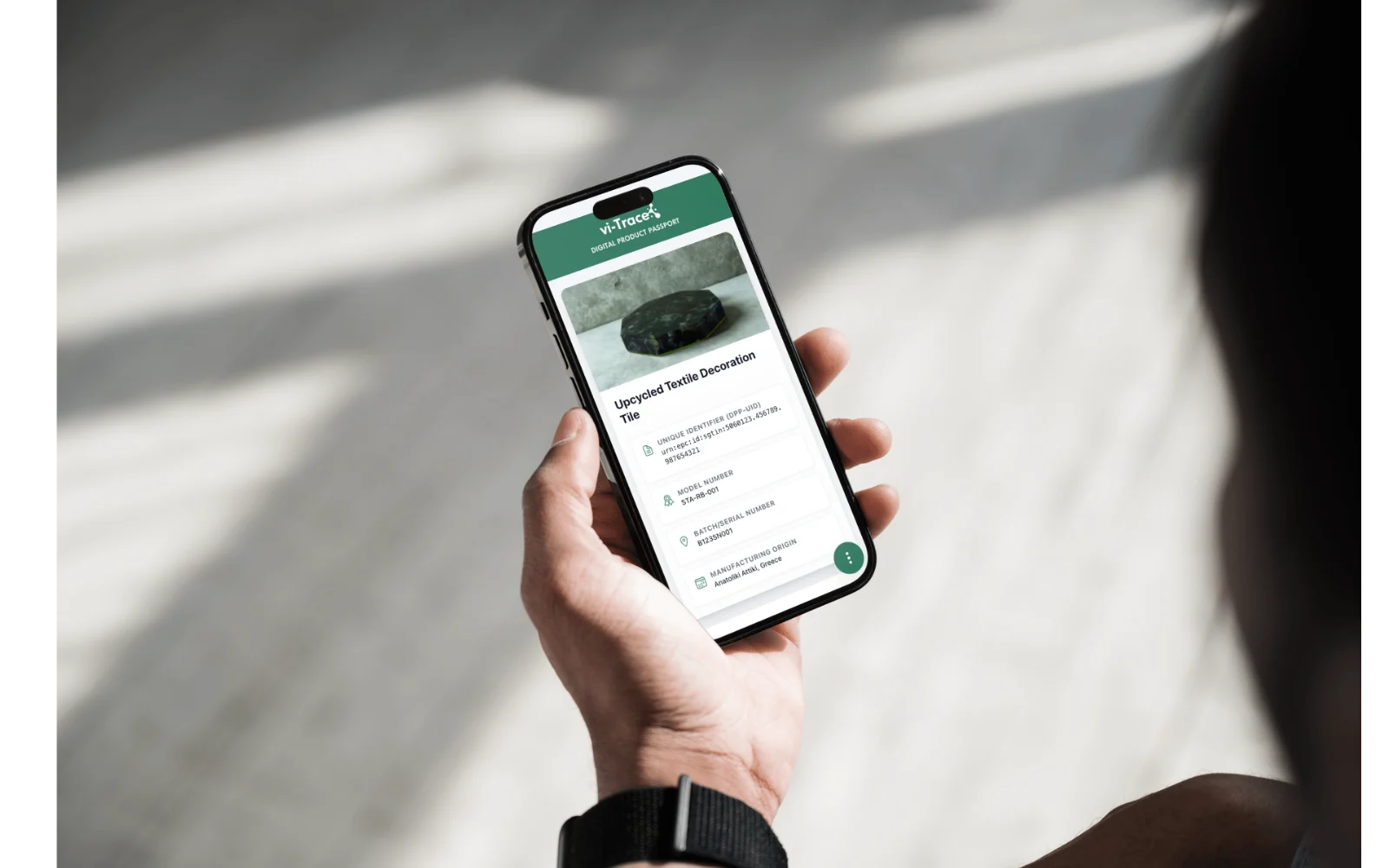
vi-Trace issues passports that capture a product’s full journey, from raw materials to end of life. Value-chain data collection, vi-Sim integration, and ledger security together produce transparent, verifiable, regulation-ready passports — not a PDF assembled by hand.
Aligned to ESPR Digital Product Passport requirements · Distributed ledger with smart-contract validation.
Who it is for
For the teams who have to prove the claim
Compliance and product
“Can we prove this product’s footprint and provenance to a regulator?”
Each field carries its source, method, and attestation, so a claim can be defended rather than asserted.
Value-chain partners
“How do I contribute my stage without exposing everything else?”
Partners submit their stage data manually or by API, scoped to what the passport needs.
Buyers and auditors
“Is this number traceable to something?”
The public passport page links every KPI to the model and the ledger record behind it.
Key capabilities
Evidence assembled once, verifiable by anyone
01
Value-chain data collection
Manual entry or automated integration with existing systems and external APIs, so each stage contributes what only it knows.
02
vi-Sim integration
KPIs and SBSC results are pulled straight from the process model, so footprint figures are auto-calculated rather than transcribed.
03
Blockchain security
A distributed database shared across stages, with smart-contract validation, makes recorded data tamper-evident.
04
Passport export and display
Published as a web page with the model, KPIs, certificates, and regulatory fields — reachable by QR code on the product.
In the product
The passport builder and the public page
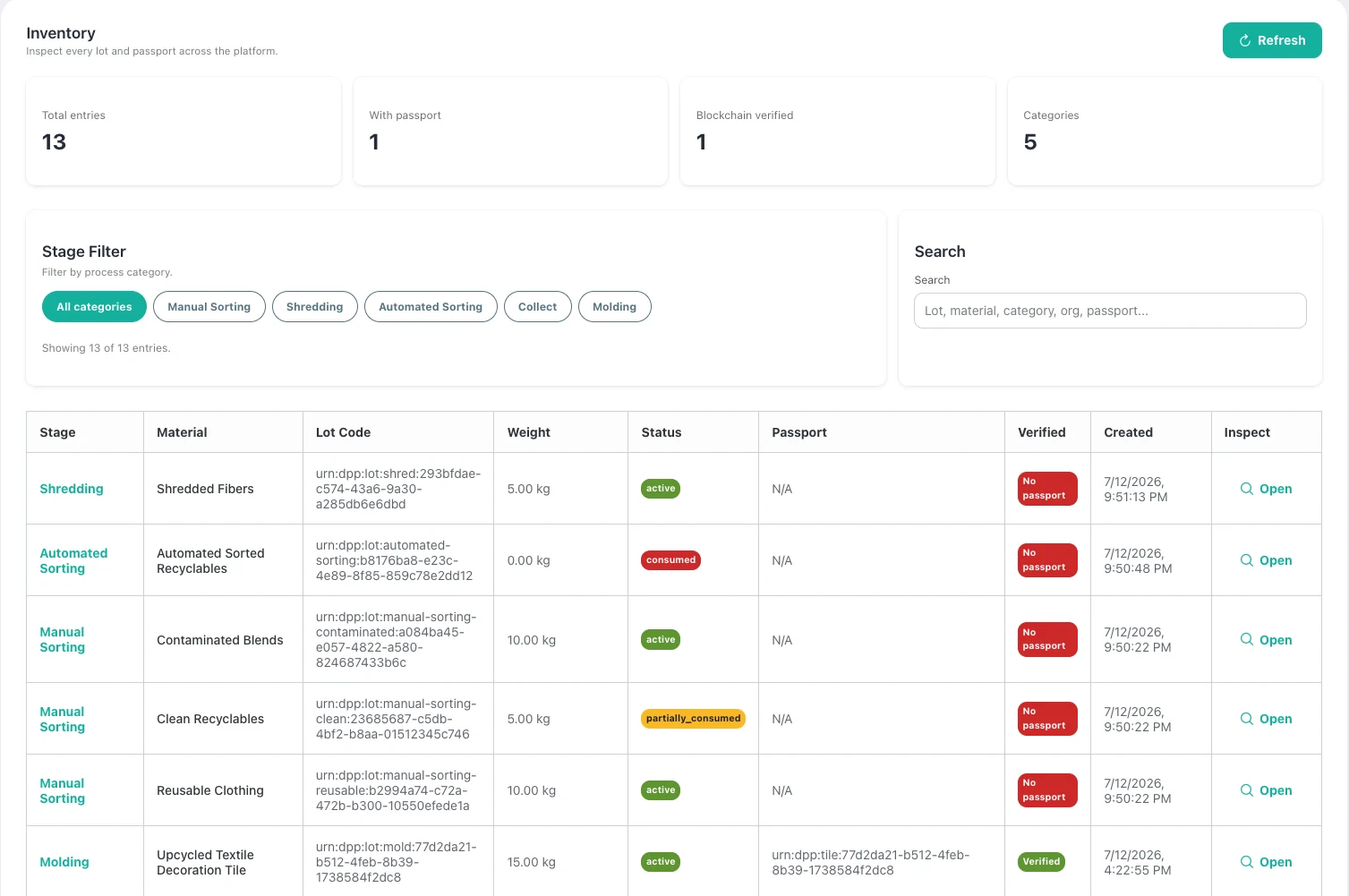
Builder — inventory stage page, administrators of the system can monitor material per stage and status.
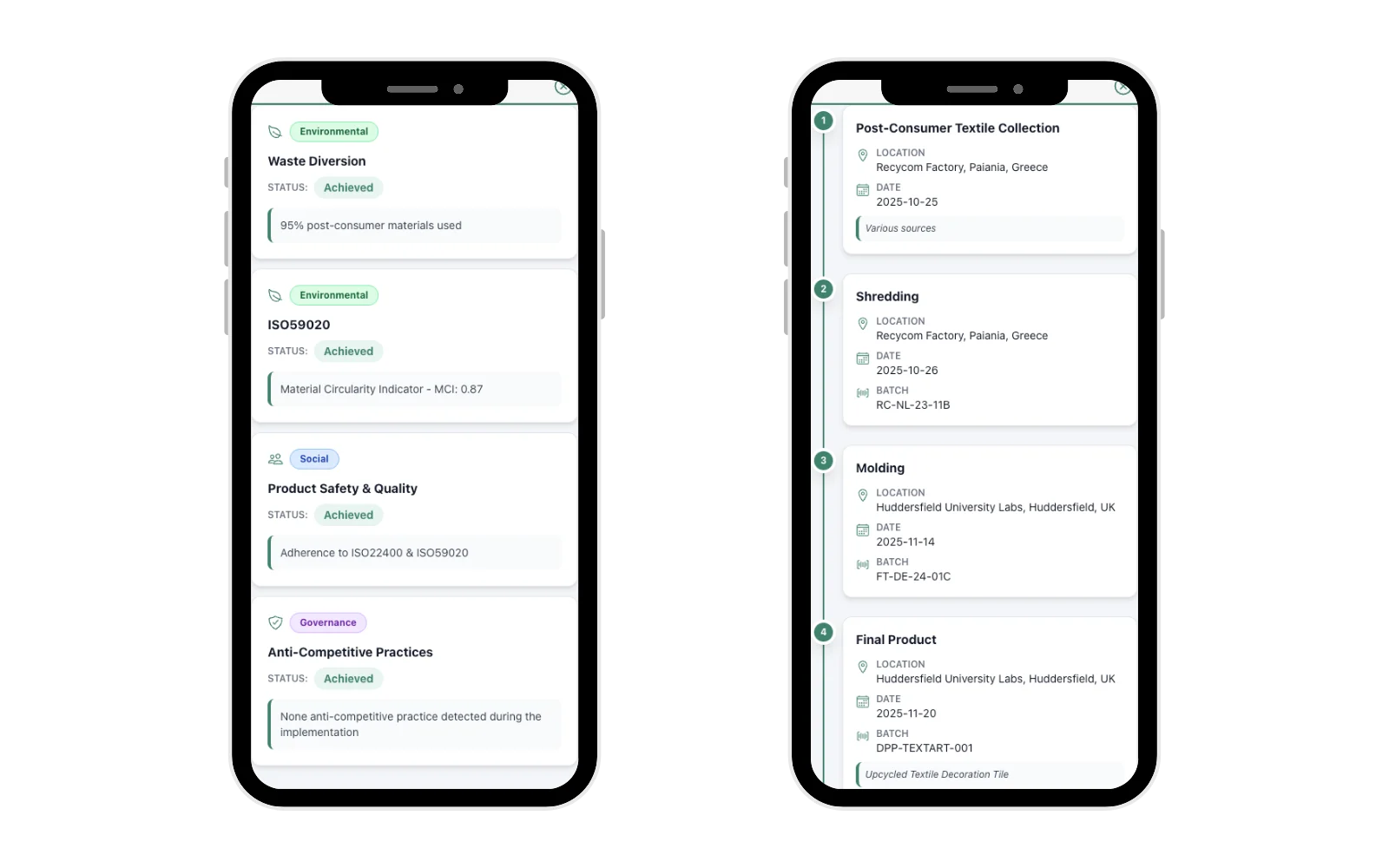
Public passport — footprint figures, certificates, and provenance, each traceable to its model and ledger record.
How it works
From scattered stage data to a published passport
1
Define the passport
Set the product, the batch scope, and the regulatory fields the passport must carry for its market.
2
Collect the stage data
Each value-chain participant submits its stage, by form or by API, against the fields the passport requires.
3
Attach model evidence
Footprint and efficiency figures are computed by the vi-Sim model instead of being entered as claims.
4
Validate and anchor
Smart contracts check completeness and consistency, then the record is anchored on the distributed ledger.
5
Publish and verify
The passport goes live as a web page with a QR code, and any reader can trace a figure back to its source.
vi-Trace collects from the systems that already hold value-chain data, and computes what it can rather than asking for it.
Data in
ERP and PLM records for materials, batches, and bills of material
Supplier and partner submissions by form or API
KPIs and SBSC results read directly from vi-Sim or the vi-Cloud twin
Data out
Public passport pages per batch, reachable by QR code
Machine-readable passport export for customers and regulators
Audit package including raw inputs and method notes
Standards and methods
ESPR Digital Product Passport data requirements
Life-cycle figures following ISO 14040 and 14044
Related tools