Software
·
vi-Cortex
vi-Cortex
Live operations
The central nervous system of your operations
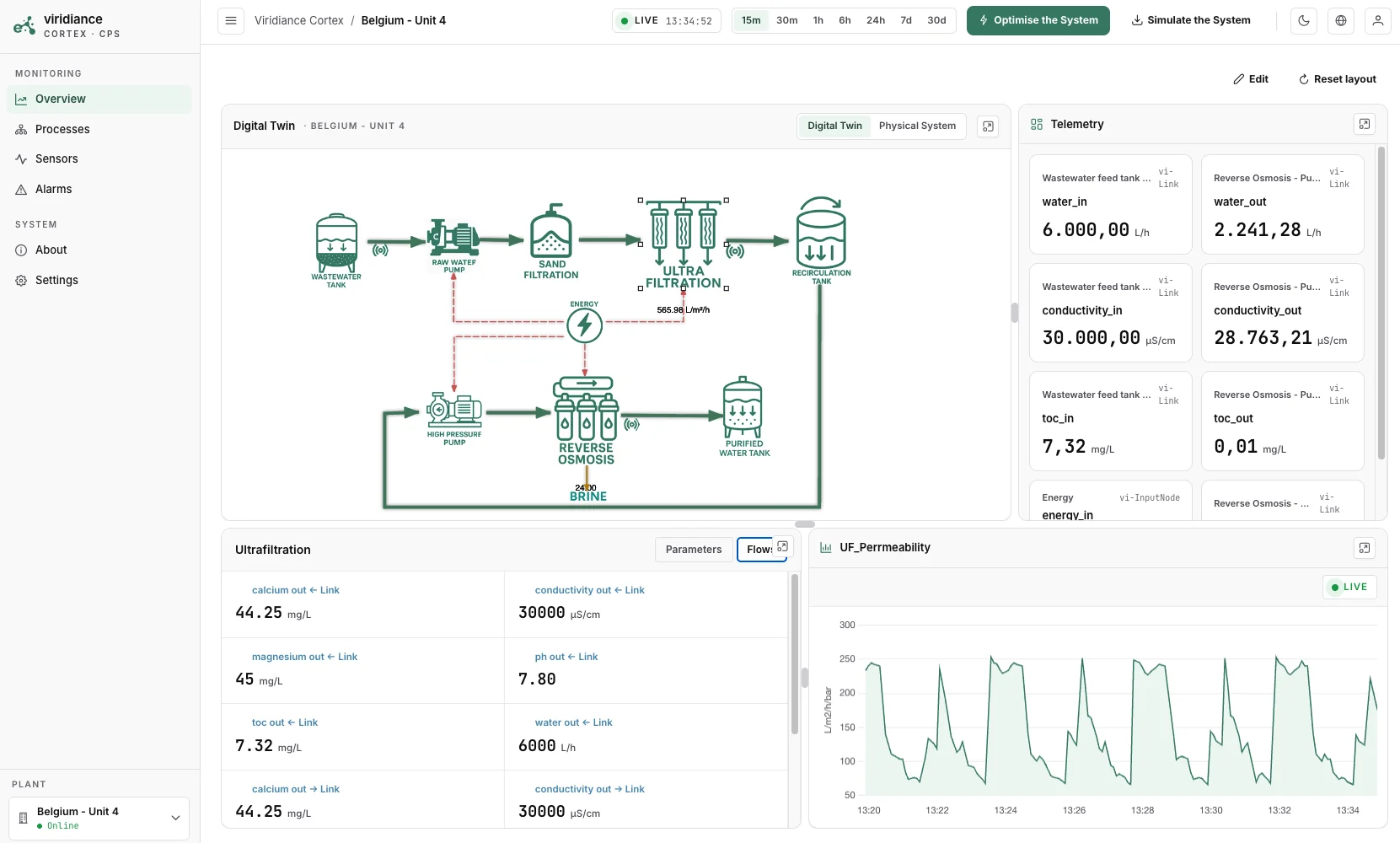
vi-Cortex connects physical assets to a unified intelligence layer. Built on industry-standard IoT protocols, it captures real-time sensor data and turns it into monitoring, prediction, and action — around the clock, against the same model the engineering team maintains.
Real-time IoT data ingestion via MQTT · Physical and AI soft sensors · Edge or cloud deployment.
Who it is for
For the people who are on the hook when the plant drifts
Operations and maintenance
“Is the plant drifting right now, and can it correct itself?”
Live dashboards plus anomaly classification, so a genuine performance issue is separated from a temporary spike.
Energy managers
“Where is consumption departing from the modelled baseline?”
The twin supplies the expected value, so deviation is measured against a method rather than last month.
Plant managers
“What did we change, and did it hold?”
Mitigation actions are recorded against the anomaly that triggered them and the outcome that followed.
Key capabilities
Monitoring is the entry point; action is the product
01
Real-time monitoring
Physical and AI soft sensors stream over MQTT onto live dashboards, with the modelled expectation shown alongside the measurement.
02
Anomaly detection
Separates temporary spikes from genuine performance issues, so an alert reflects a condition worth someone’s attention.
03
Automated mitigation
Triggers corrective action on the physical system where a response is well defined, and escalates where it is not.
04
Shadow optimisation
Solves on an isolated copy of the twin first, then applies the resulting setpoints to both the model and the asset.
In the product
Live telemetry, anomaly detail, and the mitigation record
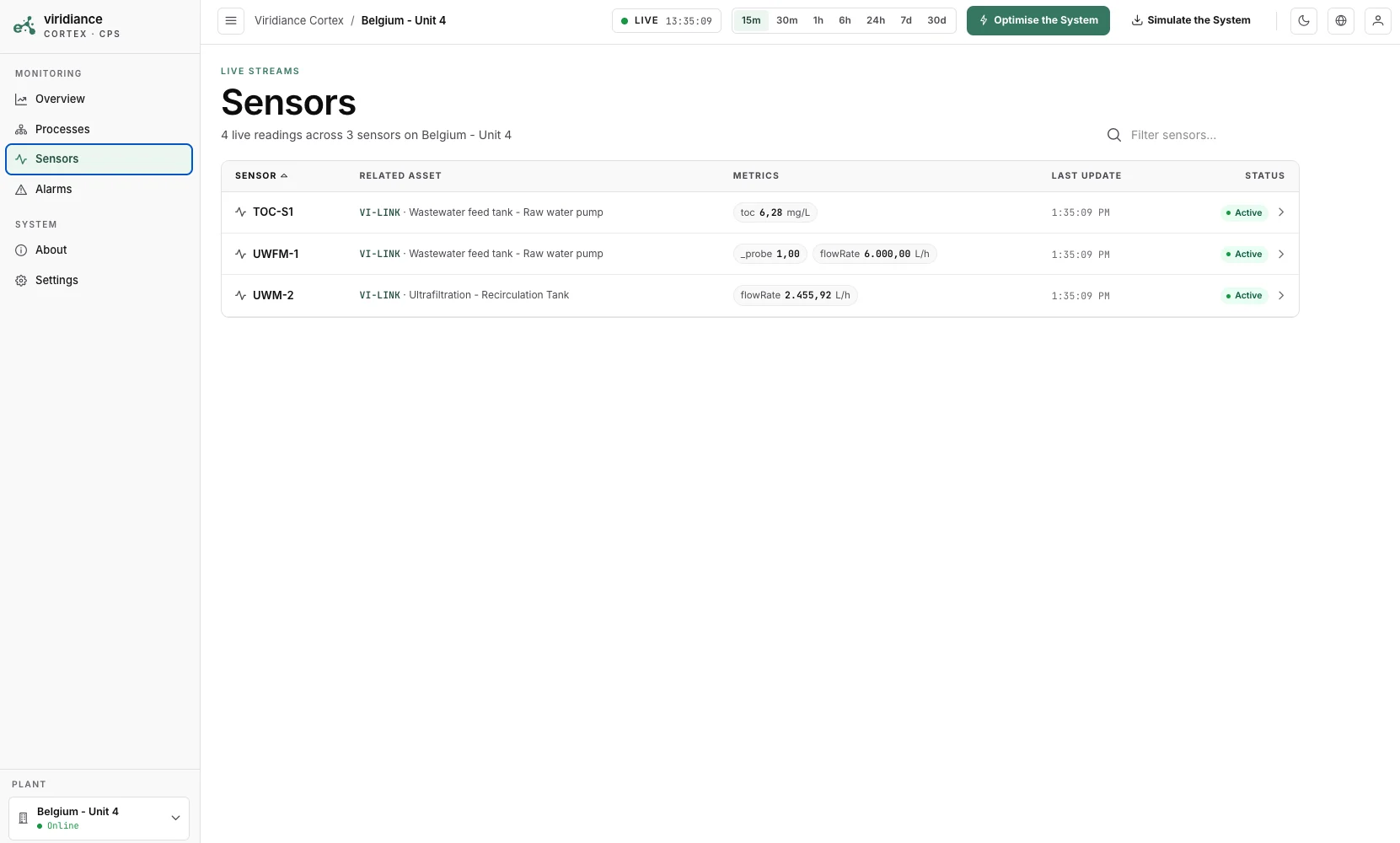
See live telemetry and historic trends from every hard and soft sensor across your process.
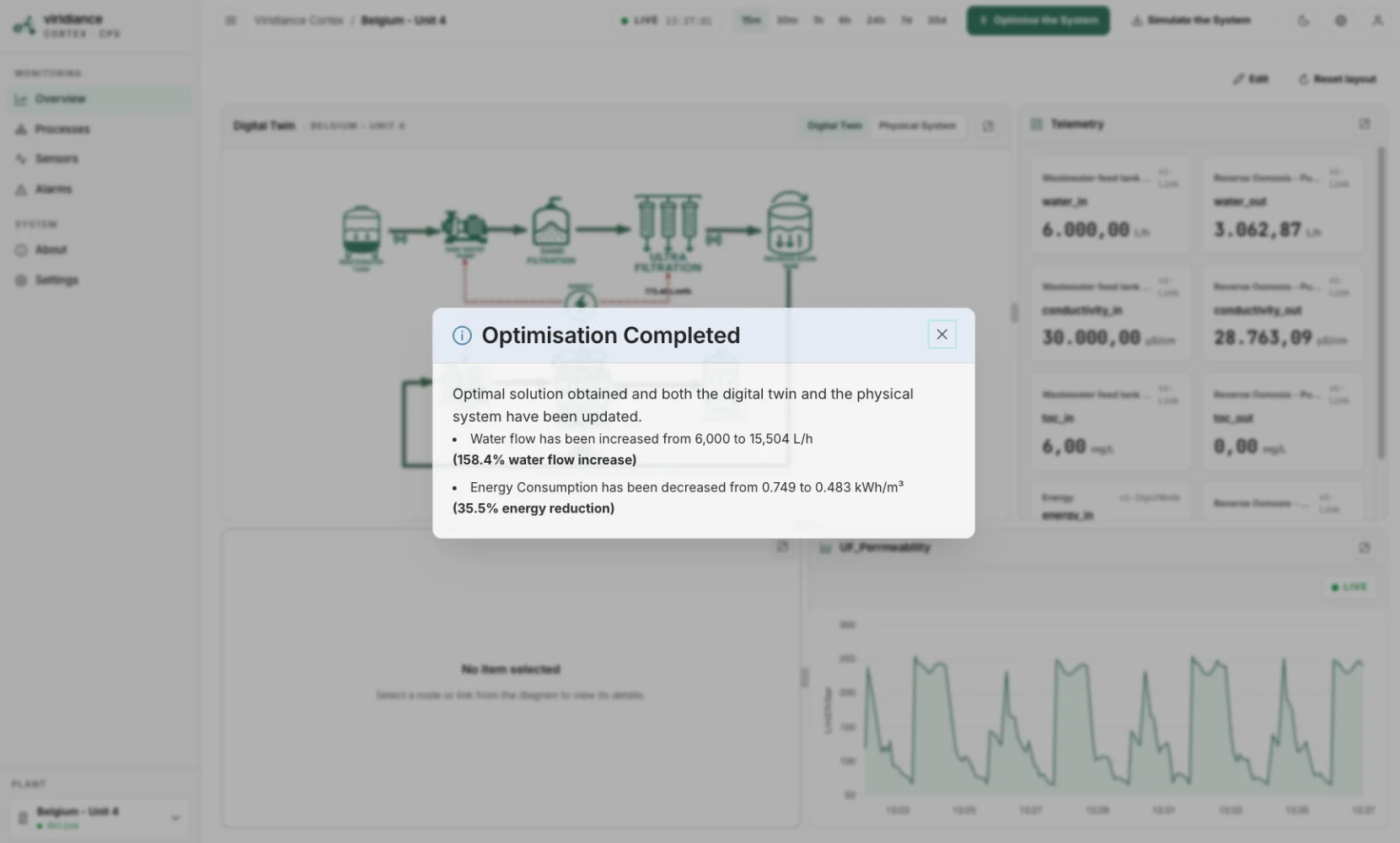
Track the measurable gains — throughput, resource use, energy — delivered by automated optimisation over time.
How it works
From a sensor reading to a corrected setpoint
1
Ingest the signals
Physical sensors and AI soft sensors publish over MQTT to the edge or cloud broker, at the rate the process actually needs.
2
Compare with the twin
Each reading is evaluated against the vi-Cloud twin’s expected value for the current operating conditions.
3
Classify the deviation
Detection distinguishes noise and transient spikes from sustained departures that indicate a real performance issue.
4
Solve in the shadow
An isolated instance searches for corrective setpoints, so nothing is written to the plant before it has been evaluated.
5
Act and record
Mitigation is applied automatically or handed to an operator, and the action is logged against the anomaly and the outcome.
vi-Cortex meets existing automation on its own terms — standard industrial protocols, no rip-and-replace of the control layer.
Data in
MQTT telemetry from physical sensors and gateways
OPC UA, SCADA, and historian data for existing instrumentation
AI soft sensors estimating quantities that are not metered
Data out
Setpoint and control write-back to PLC and SCADA layers
Alerts and anomaly records to operations tooling
Operational history back into the vi-Cloud twin
Platform
Edge deployment where latency or connectivity requires it
Per-asset access control aligned with the vi-Cloud tenant
Related tools